Buying guide · Updated for 2026
Best Infrared Saunas: Complete Buying Guide (2026)
Written by Maria Almeida
Choosing a home infrared sauna is less about finding a single "best" model and more about finding the right fit. Before you buy, it helps to compare sauna size and the number of users, EMF levels, heating technology, materials, temperature controls, the space you have available, portability, additional features and, of course, your budget. This guide walks through each factor so you can shortlist the best infrared saunas for your home with confidence.
Our Top Infrared Sauna Picks
These are the same five options ranked on our homepage, listed in the same order. We compare them using manufacturer specifications and product documentation. See the full write-ups in our Top 5 Infrared Saunas.
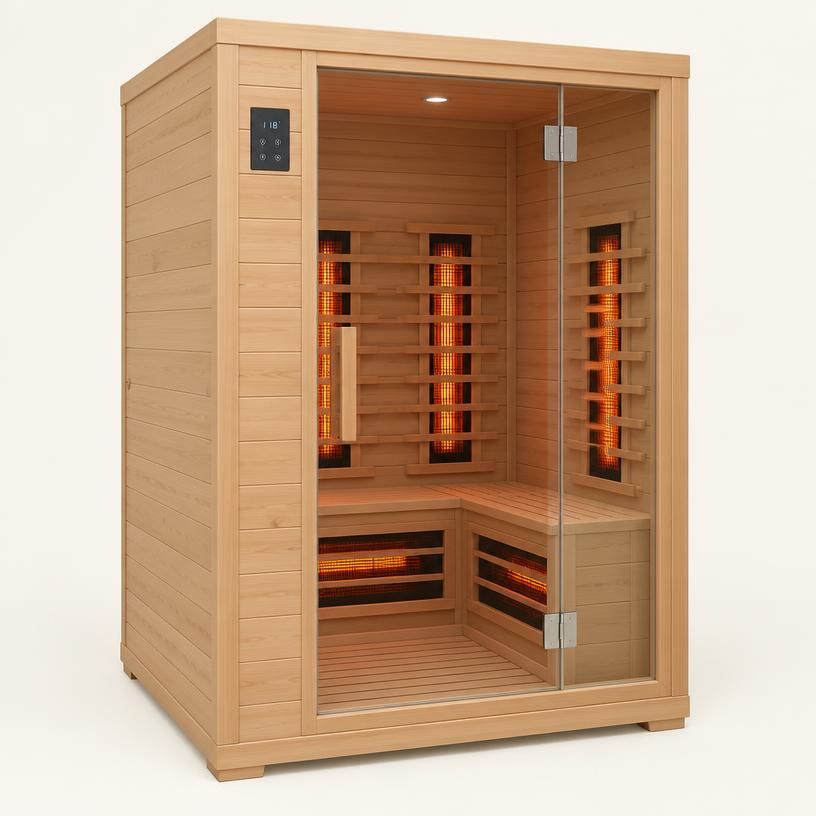
#1 · Best Overall Infrared Sauna
Dynamic Barcelona Infrared Sauna
A well-rounded Canadian hemlock cabin for one or two people that pairs Ultra Low EMF carbon heating with a red light feature, chromotherapy and Bluetooth audio — and operates on 120V / 15-amp electrical service.
Check Price on Amazon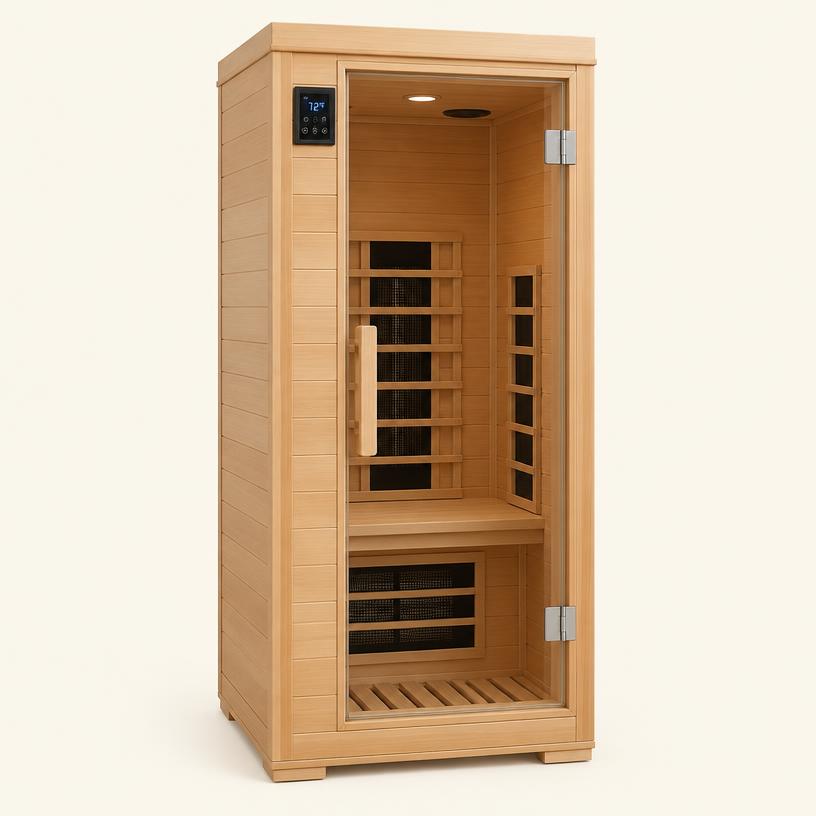
#2 · Best 1-Person Infrared Sauna
Infrared Home Sauna Room – 1 Person
A compact single-person hemlock sauna with five low-EMF carbon panels, simple LCD controls and modular assembly — a sensible fit for smaller spaces.
Check Price on Amazon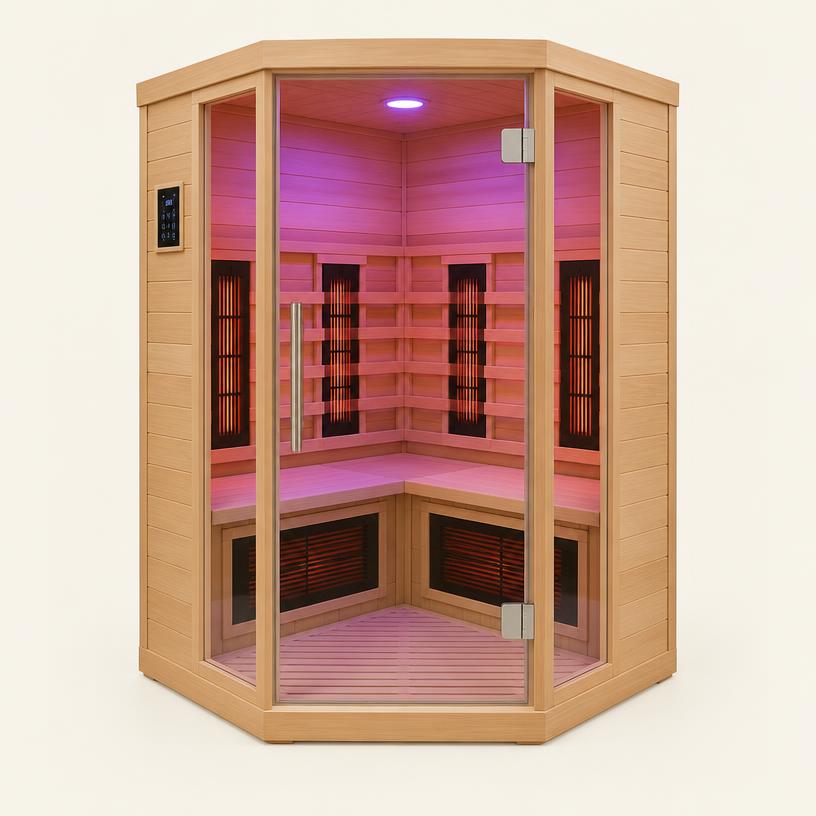
#3 · Best Smart Infrared Sauna
Smart APP Control 2–3 Person Ultra Low EMF (0–5mG) Far Infrared Sauna for Home
A corner-design hemlock sauna for two to three people, controlled from an app or touchscreen, with seven far-infrared carbon panels rated at 0–5 mG EMF.
Check Price on Amazon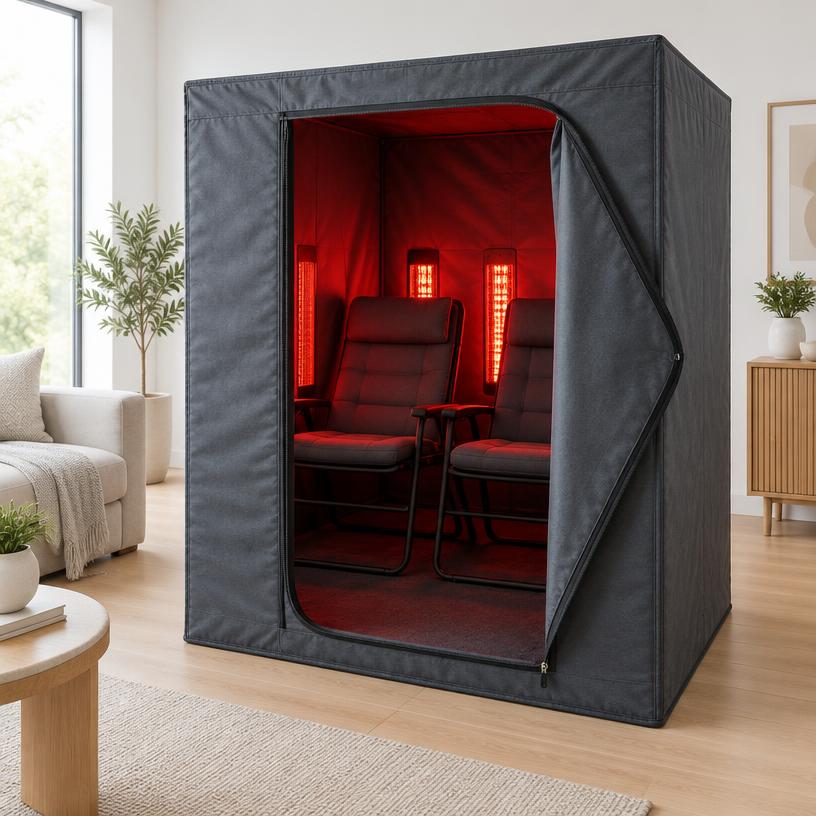
#4 · Best Portable Full-Spectrum Infrared Sauna
ZONEMEL Portable Full Spectrum Infrared Sauna — 2 Person
A spacious portable infrared sauna for two people with three carbon-fiber heating panels, 1600W heating, remote controls and a foldable insulated enclosure — a practical option for buyers who want more room without installing a permanent wooden cabin.
Check Price on Amazon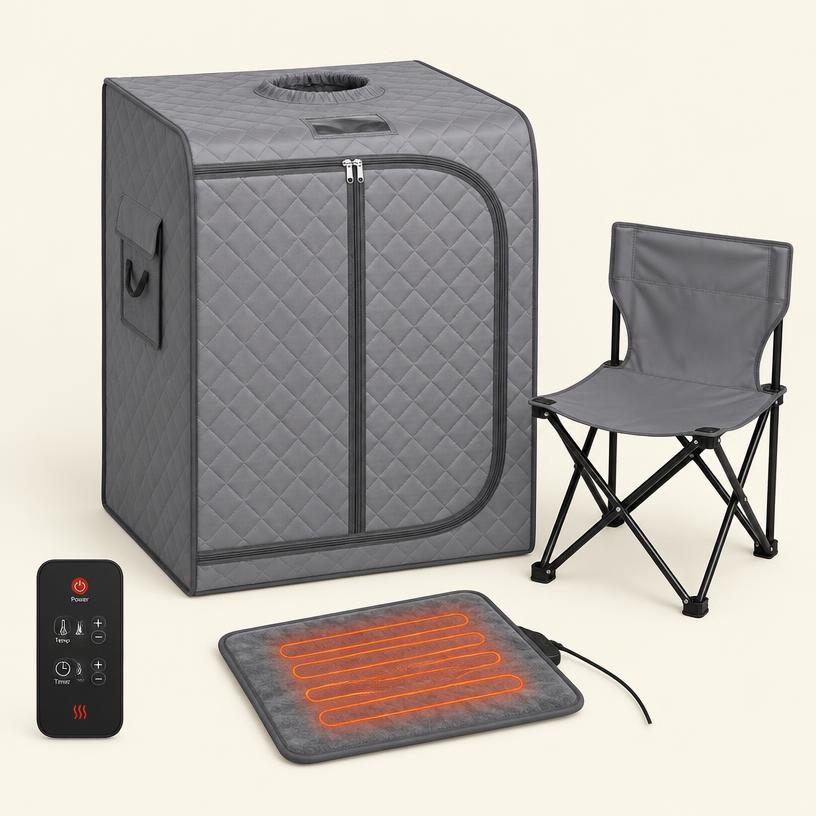
#5 · Best Portable Infrared Sauna
SereneLife Portable Sauna Box for Home
A foldable infrared sauna tent with three carbon fiber panels, a remote control and a heated foot pad — a portable option that may suit smaller spaces.
Check Price on Amazon
Comparison at a Glance
Factual attributes only. Where a detail isn't published, we mark it "Not specified."
| Model | Type | Capacity | Heater | EMF | Construction | Portable | Controls | Notable features |
|---|---|---|---|---|---|---|---|---|
| Dynamic Barcelona | Infrared cabin | 1–2 people | 6 carbon panels | Ultra Low EMF (<3 mG) | Canadian hemlock | No | Not specified | Red light feature, chromotherapy, Bluetooth |
| Infrared Home Sauna Room – 1 Person | Infrared cabin | 1 person | 5 carbon panels | Low EMF | Hemlock | No | LCD control | LED reading light, Bluetooth, 1200W / 110V |
| Smart APP 2–3 Person Far Infrared | Infrared cabin (corner) | 2–3 people | 7 carbon panels | Ultra-low, approx. 0–5 mG | Canadian hemlock | No | App control | Pentagon corner design, Bluetooth speaker |
| ZONEMEL Portable Full Spectrum 2 Person | Portable full-spectrum infrared sauna | 2 people | 3 carbon-fiber heating panels / 1600W | Not specified | Foldable insulated fabric enclosure | Yes | Remote control | Up to 60°C / 140°F, 1–60 minute timer, two padded chairs, red LED light panel |
| SereneLife Portable Sauna Box | Portable infrared tent | Not specified | 3 carbon fiber panels | Not specified | Fabric tent | Yes | Remote control | Heated foot pad, folding chair, up to approx. 140°F |
For deeper head-to-head reviews, visit Reviews & Comparisons.
What Is an Infrared Sauna?
An infrared sauna uses infrared heating panels to warm the people inside it, rather than heating the surrounding air to very high temperatures as a traditional sauna does. Because of this, infrared saunas typically operate at lower air temperatures while still producing enough warmth for a sweating session.
Home models range from wooden cabins built for one to three people to foldable fabric tents that store in a closet.
How Infrared Saunas Work
Heating panels emit infrared energy that is absorbed by the skin and surfaces inside the sauna. Most home units use far infrared; some add near-infrared or red light features (see red light saunas). Panel count, placement and heater type affect how evenly and quickly the sauna warms up.
Many cabins need a short pre-warm-up period before a session, and most let you set temperature and session time from a control panel, remote or app.
Types of Infrared Saunas
Cabin (indoor) saunas
Freestanding wooden rooms, usually for 1–3 people. They offer the most comfort and features but need dedicated floor space.
Corner saunas
A pentagon-shaped cabin designed to tuck into a room corner, often fitting more people into a smaller footprint.
Portable infrared saunas
Foldable tents with a chair and a few heating panels. Easy to store and move, but with fewer features and a fabric rather than wood build.
Full-spectrum saunas
Combine far, mid and near infrared. Availability and specifications vary widely by manufacturer.
Low EMF vs. Standard EMF
EMF (electromagnetic field) levels are a common concern because you sit close to the heaters for extended periods. Many manufacturers now market "low EMF" or "ultra-low EMF" heaters, sometimes with a stated figure measured in milligauss (mG).
For models marketed with low-EMF heaters, see our guide to low-EMF infrared saunas.
Carbon vs. Ceramic Heaters
Carbon heaters
Large, thin panels that spread heat over a wide surface at lower surface temperatures. They are a common choice in home infrared sauna cabins, including the infrared cabin models featured in our current selection.
Ceramic heaters
Smaller elements that run hotter and concentrate heat in specific spots. They can heat up quickly but may feel less even.
Sauna Size and Capacity
Buy for how you'll actually use it. A slightly larger sauna often feels more comfortable, but it also needs more space and power.
1-Person saunas
Best for small spaces and solo sessions. Compact footprint and usually the most affordable cabins. Compare 1-person infrared saunas.
2-Person saunas
A popular middle ground — room for a partner or simply more space to stretch out on your own. Compare 2-person infrared saunas.
Larger (3+ person) saunas
Suitable for families or shared use. Check dimensions, ceiling height and electrical needs carefully.
Materials and Construction
Canadian hemlock is the most common wood for home infrared saunas thanks to its stability and mild scent; cedar and basswood are also used. Check panel thickness, joinery or modular clip assembly, door glass and the warranty terms. Portable units use insulated fabric instead of wood.
Temperature Controls and Smart Features
Temperature and timer controls
Look for adjustable temperature and session time, clearly labelled controls, and ideally inside and outside access to the panel.
Smart features and app control
Some saunas can be controlled from a smartphone app, letting you start pre-heating before you reach the sauna. See our guide to smart app-controlled saunas. Bluetooth audio, LED reading lights and chromotherapy are common extras — nice to have, but secondary to heating quality and build.
Portable vs. Traditional Cabin Saunas
Here's how portable saunas compare with traditional cabins:
Portable
- Folds away when not in use
- Suited to renters and small apartments
- Fewer heaters and features
- Head usually stays outside the tent
Cabin
- Full-body enclosure with seating
- More heaters and extras
- Needs permanent floor space
- Requires assembly
Electrical and Space Requirements
Electrical requirements
Many 1–2 person cabins run on a standard 110–120V household outlet, sometimes requiring a dedicated 15-amp circuit. Larger models may need a dedicated circuit or higher voltage. Always check the manufacturer's requirements and consult a qualified electrician if unsure.
Space requirements
Measure floor area, ceiling height and door clearance, and leave a few inches around the cabin for ventilation. Place it indoors on a level, dry surface near the outlet it needs.
What to Look for Before Buying
- Number of users and interior size
- Published EMF figures
- Heater type and panel count
- Wood type and build quality
- Temperature range and controls
- Electrical requirements
- Available space and placement
- Assembly method
- Warranty coverage
- Budget and overall value
How to Choose the Right Infrared Sauna for Your Home
- Decide who will use it. One person, a couple or a family.
- Measure your space. Then confirm the electrical setup nearby.
- Choose cabin or portable. Based on space and how permanent you want it to be.
- Compare heaters and EMF. Prefer clearly published specifications.
- Pick the features that matter. App control, audio or lighting — only if you'll use them.
- Set a budget. And compare warranties within it.
Interested in wellness topics? Read our overview of sauna health benefits.
How We Evaluate Saunas
Our recommendations are based on research — manufacturer specifications, product documentation and publicly available information — not on hands-on testing. Every option is compared against the same criteria:
- Heating technology
- EMF information
- Construction
- Capacity
- Controls
- Usability
- Portability
- Features
- Overall value